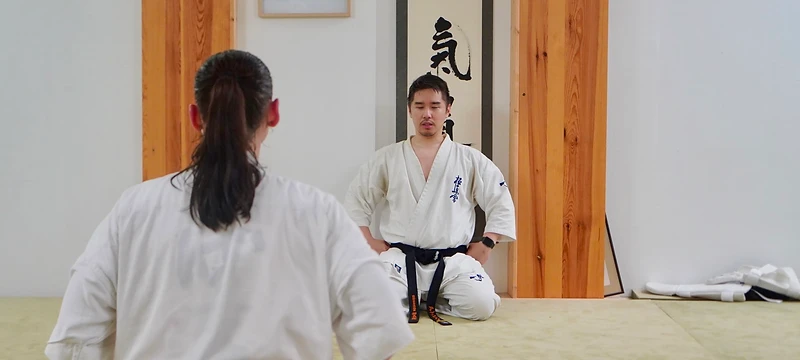
The importance of World Teachers' Day in Kyokushin Karate: Respect and gratitude for our Sensei
What is World Teachers' Day and why is it celebrated?
World Teachers' Day, which is celebrated annually on October 5th, honors the work of teachers worldwide. It was launched in 1994 by UNESCO in order to raise awareness of the important role of teachers in society. Teachers are the pillars of education and contribute significantly to the development of knowledge and character. They shape generations of students and thus influence the future of a society in the long term.

This annual celebration is an opportunity not only to show respect and gratitude, but also to highlight the immense importance of teachers for individual and collective progress.
What does "Sensei" mean and how is the term interpreted?
Der Begriff „Sensei“ kommt aus dem Japanischen und bedeutet wörtlich „der, der vorher gegangen ist“. Er wird für Lehrer, Mentoren und Meister in verschiedenen Bereichen verwendet, nicht nur im Bereich der Kampfkunst, sondern auch in der Wissenschaft, Kunst und Philosophy.
In Japanese culture, the Sensei enjoys high respect, as he imparts both professional knowledge and ethical and moral values. This respect is deeply rooted in Japanese society and shapes the teacher-student relationship.
In the West, the term "Sensei" is often translated simply as "teacher", but without the deeper spiritual and cultural significance associated with it in Japan.
The Sensei in Karate: More than just a trainer


In Kyokushin Karate ist ein Sensei mehr als nur ein technischer Trainer. Er fungiert als spiritueller und moralischer Führer, der seine Schüler nicht nur körperlich, sondern auch geistig formt. Der Sensei lehrt die Prinzipien des Budo – den Weg des Kriegers –, der Disziplin, Respekt und ständige Weiterentwicklung umfasst.
- Physical role: The Sensei guides students through techniques (Kihon), forms (Kata) and sparring (Kumite). He helps them improve their physical abilities, develop endurance and master the fundamentals of the martial art.
- Mental role: A Sensei also supports mental strength. He teaches patience, perseverance and the ability to remain calm and focused under pressure.
The relationship between Sensei and student in Kyokushin: The principle of Shu Ha Ri


One of the deepest teachings in Kyokushin and in the relationship between Sensei and student is the principle Shu Ha Ri, which describes the path of the student's development:
- Shu: The student initially follows the Sensei's instructions strictly. He imitates and learns without making his own adjustments.
- Ha: In the second stage, the student begins to question the techniques and make his own adjustments.
- Ri: Finally, the student reaches a level at which he thinks and acts independently, but always with respect for the roots of his knowledge.
This principle promotes not only technical skill, but also a deep respect for the tradition and the path of karate.
The relationship between Senpai and Kohai


In Kyokushin, alongside the Sensei, there is also the important relationship of Senpai (senior students) and Senpai Kohai (junior students). Senpais take on a mentoring role for the Kohai by passing on their experiences and helping them walk the path of karate. This hierarchical yet respectful relationship is a central part of dojo etiquette and strengthens the cohesion of the karateka.
The advantages of a harmonious teacher-student relationship in the dojo
A dojo in which the relationship between Sensei and student is in harmony offers an ideal environment for personal growth and success:
- Respectful training: Students feel respected and appreciated, which leads to greater motivation.
- Steady development: A committed Sensei challenges his students to expand their limits while simultaneously offering the support they need.
- Strong community: If students and Sensei maintain a strong, respectful relationship, this strengthens the cohesion in the dojo. The students not only learn from each other, but also develop mutual trust.
Authentic Kyokushin Karate at the Shinzen Dojo Berlin
The Shinzen Dojo Berlin embodies this philosophy in its teaching. Authentic Kyokushin Karate is taught here, based on the values of respect, discipline and personal development. The Sensei and Senpai of the dojo live the principle of mutual respect and continuous improvement, both in physical and mental training.
The students at the Shinzen Dojo benefit from a deep, respectful teacher-student relationship that goes beyond mere training. Here, karate is understood as a way of life that strengthens both body and mind.
Concluding remarks
A dojo that preserves the tradition and respect towards the Sensei and Senpai creates an environment in which karate is not just a martial art, but a path of personal and spiritual development. At the Shinzen Dojo Berlin, this philosophy is lived out every day.
Osu!


