Karate for Women in Berlin
Kyokushin Karate for beginners and advanced students at Shinzen Dojo Berlin-Schöneberg.
Women and men train together. Beginners can join without prior karate experience. An overview of Martial arts in Berlin helps with orientation.
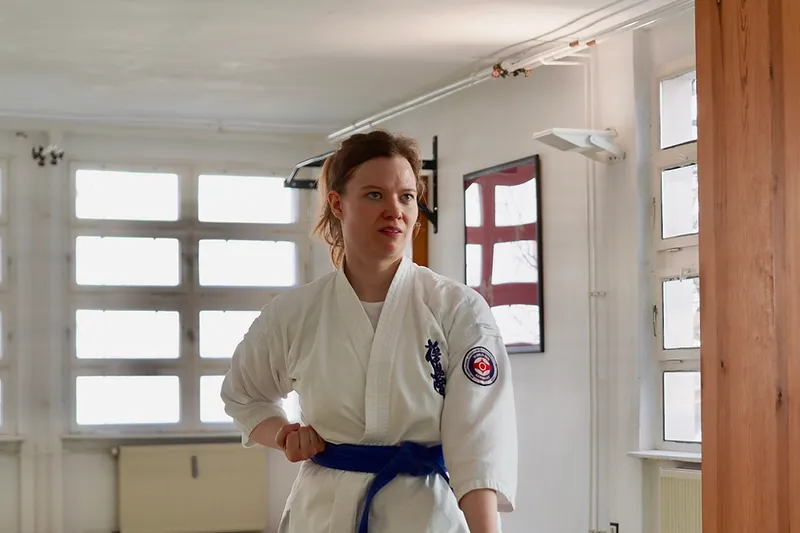
Beginners welcome
No prior karate experience necessary.
Joint training
Women and men train together.
2× per week
Monday & Thursday, 20:30–21:45.
Berlin-Schöneberg
Kolonnenstraße 26.
Is Kyokushin Karate for me?
Many beginners wonder if they meet the requirements for Kyokushin Karate. Most concerns can be clarified directly.
Am I fit enough?
Fitness is not a prerequisite. You should be prepared to be physically active. Conditioning comes with training.
Am I flexible enough?
Flexibility develops through regular training. No one expects you to kick high on the first day.
Do I have enough experience?
No prior experience necessary. Techniques, movements, and dojo procedures are taught step-by-step.
Am I strong enough?
Strength comes through training. Everyone starts at their own level.
Am I too inexperienced?
Every karateka was a beginner once. The dojo is made exactly for this start.
Do I have to fight immediately?
No. Beginners learn the basics first. Kumite is added step-by-step and prepared for.
Must I for karate for karate?
No. You do not have to arrive already fit. However, you should bring the willingness to be physically active and challenge yourself.
The training itself is physically demanding. Conditioning, strength, and endurance develop step-by-step through regular training. Everyone starts at a different level.
- Conditioning develops through regular training
- Techniques are built up step-by-step
- Everyone starts at a different level
- The training is physically demanding

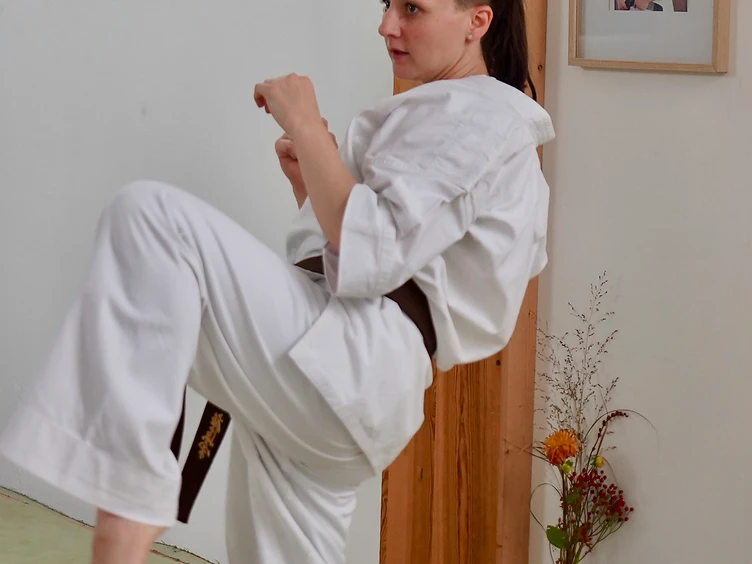
Kyokushin Karate step by step
As a beginner, you do not have to understand Japanese commands, techniques, or dojo etiquette immediately. You learn through participation and repetition, step-by-step.
Training includes various areas, which you will become familiar with over time: Kihon (basic techniques), Kata (set movement patterns), Kumite (sparring practice) and Conditioning. Nobody expects you to understand everything on your first day.
Your first training session at Shinzen Dojo Berlin

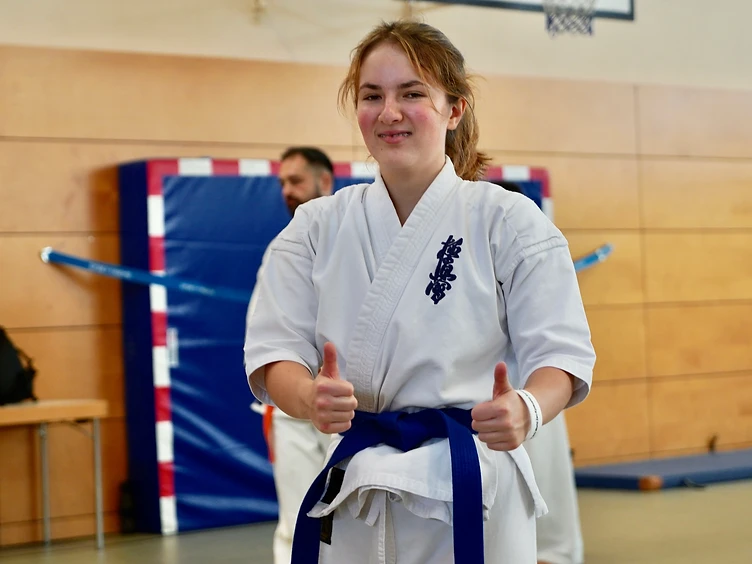
Beginners usually stand towards the back of the training formation at the beginning. This is not exclusion, but the traditional Dojo structure: you can observe more experienced karateka, follow movements, and get to know the Dojo procedures.
In a traditional Dojo, the Senpai-Kohai principle applies: more experienced members (Senpai) provide an example and guidance, newer ones (Kohai) follow and learn. No one expects beginners to know everything already.
- Comfortable sportswear is sufficient, no Karate-Gi required
- Follow the group and perform exercises as best you can
- Questions are normal and welcome
- No one expects perfect technique on the first day
- Learning through observation and repetition
Do I have to fight in Kyokushin?
Not at the beginning – however, Kumite is a part of it in the long term.
Kyokushin is a full-contact karate style. Beginners first learn the basics and are gradually introduced to partner exercises and Kumite. No one is thrown in at the deep end.
We do not hide the fact that Kyokushin is full-contact. We also do not position Kyokushin as a non-contact fitness program. You will be prepared, not ambushed.
You will not be sent into Kumite on your first day. But Kyokushin without Kumite would not be complete Kyokushin training in the long term.
Karate & self-defence for women
Many women in Berlin search for a self-defense course and come across martial arts or karate. The distinction is important: Shinzen Dojo does not offer a separate self-defense crash course. We regularly teach Kyokushin Karate.
However, the training teaches skills that can be relevant for physical altercations: distance management, blocking, timing, striking and kicking techniques, movement under pressure, and controlled partner practice. These skills are developed through continuous training, not through a one-time safety promise.
If your main goal is a short-term self-defense workshop with scenarios, verbal de-escalation, or special escape techniques, you should look specifically for a corresponding course. If, on the other hand, you would like to build sparring practice, fitness, and technical skills in the long term, Kyokushin can be a suitable option.
What you actually train with us
- Distance, timing, and blocking
- Striking and kicking techniques
- Movement and reaction under stress
- Controlled partner exercises and later Kumite
- Stamina, coordination, and body awareness
- Regular training instead of a one-time workshop
Do women and men train together?
Yes. Adult training is mixed. Women and men train together at Shinzen Dojo Berlin.
The training structure is based on experience, ability, technique, and appropriate training intensity – not on gender. There is no separate women's group and no special pairing rules.
You can find out more about the training structure and target groups on the page Karate for adults.

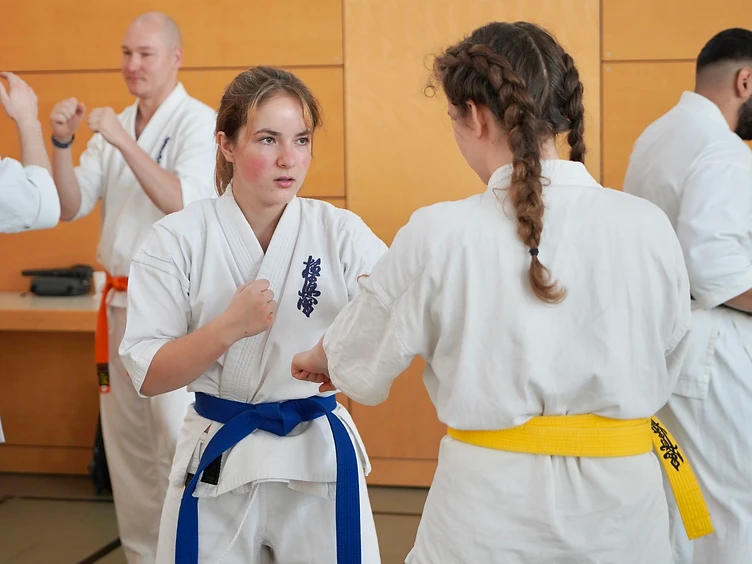
What women can expect from Kyokushin
Regular training can develop various physical and mental areas. No guarantees – but clear training effects through continuous practice.
Physical conditioning
Regular training can develop strength, endurance, and physical resilience.
Coordination
Techniques and movement sequences can improve coordination and body awareness.
Technique
Striking, blocking, and kicking techniques are taught step-by-step and repeatedly.
Flexibility
Regular training can increase flexibility over time.
Concentration
Martial arts training requires and promotes focus and attention.
Discipline
The dojo structure provides a framework and orientation that can affect daily life.
Dealing with pressure
Training with contact can help in dealing with physical pressure.
Step-by-step development
Belt gradings provide structure. Progress is measurable, week by week.
Confidence through skill
Real techniques and real progress can lead to realistic confidence.
Structured training
Kihon, Kata, Kumite and conditioning — a clear framework, not an arbitrary workout.
What is Kyokushin?
Kyokushin is a Japanese karate style, known for structured basics, Kata, physical conditioning, realistic Kumite, discipline, and continuous technical development.
Founded in 1964 by Masutatsu Oyama in Tokyo. The word "Kyokushin" means "ultimate truth" – a guiding principle that shapes the training.
You can find more about the history, philosophy, and training principles in the detailed Kyokushin Guide.

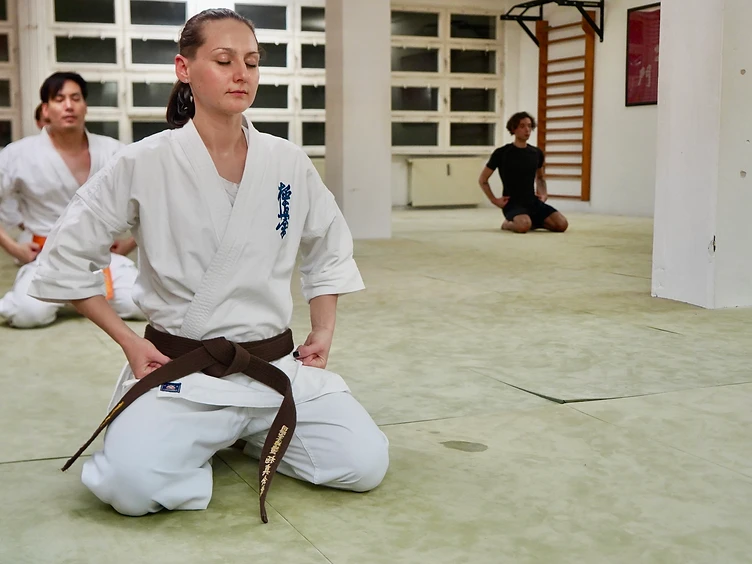
Training content at Overview
Regular adult training includes four pillars that are combined in every training session.
Kihon
Basic techniques: stances, strikes, blocks, and kicks. The foundation of every training session.
Kata
Defined movement patterns for technique, control, and coordination. Performed alone, repeated precisely.
Kumite
Progressive partner and combat practice. Prepared step-by-step, not from the first day.
Conditioning
Strength, endurance, and physical resilience. Without equipment, just using the body.
Training sessions times
Schöneberg location
Google Maps – Kolonnenstraße 26, 10829 Berlin
This content is provided by a third party and is loaded only after you consent to external media.
- Kleistpark (approx. 5 min. walk)
- Julyus-Leber-Brücke (approx. 7 min. walk)
- M48 – stop nearby
Parking management in Schöneberg, limited parking. Public transport arrival recommended.
Central location in Berlin City-West, Tempelhof-Schöneberg district. Easily accessible from Friedenau, Kreuzberg, Wilmersdorf, and Tempelhof.
Karate for women explained
Kyokushin Karate itself erleben
You don't need any prior karate experience. Come to the Dojo and experience the training yourself.
Book a trial training