Skip to content
Kyokushin Karateka in basic stance at Shinzen Dojo Berlin
History · Okinawa · Ryūkyū · Japan

The history of Karate

From the martial arts of the Ryūkyū Kingdom to a global Budo and sports culture.

  1. Stage 1Fujian / FuzhouTrade and diplomatic contacts
  2. Stage 2Ryūkyū / OkinawaKingdom with its own defensive tradition
  3. Stage 3Shuri · Naha · TomariTeaching lineages of the 18th/19th century
  4. Stage 4Japanese mainlandSchools, universities, Budō associations
  5. Stage 5Worldwide spreadAssociations, competition, full-contact

The sequence shows contacts and spread — not a family tree. Karate developed in several places simultaneously and in several directions.

Evidence levels of this page
  • Historically verified

    Supported by documents, official records, or institutional evidence.

  • State of research / probable

    Generally represented this way in academic literature, but not conclusively provable.

  • Oral tradition / legend

    Oral tradition or later narrative without contemporary evidence.

Locations

Where Karate ori­gi­na­ted and spread

Eleven locations that are important for development. Tap or click on a location — the explanation appears below it.

China · FujianRyūkyū · OkinawaKyūshūHonshū

Schematic representation without border lines. Dashed line: contacts and migration paths of transmission — not a lineage.

1429–1879

Ryūkyū / Okinawa 琉球 · 沖縄

The Ryūkyū Kingdom mediated between China, Japan, and Southeast Asia. Over centuries, an independent, court-influenced martial arts tradition emerged here — the prerequisite for what would later be called Karate.

Historically verified
Periods

Seven periods — no hier­ar­chi­cal sequence

The classification organizes subject matter; it does not claim a linear development from A to B. The periods run in parallel chronologically and overlap.

Kyokushin is not a separate karate period in this structure, but a 20th-century development — it has its own section further down.

A kingdom in exchange

Tributary missions from the Ryūkyū Kingdom to the Ming court are documented as early as 1372; in 1392, Chinese families from Fujian settled in Kumemura near Naha. The island was united under Shō Hashi in 1429. Through these channels, literacy, administrative knowledge, music, craftsmanship — and military and physical training practices arrived.

Historically verified

1372 is not the birth year of Karate

The year is frequently cited as the "origin of Karate." What is documented is diplomatic relations with China, not a martial art. There is a gap of about four centuries between the beginning of these exchanges and the earliest reconstructible lineages, for which there are hardly any meaningful sources.

State of research / probable

Weapons restrictions — a controversial origin story

Following the invasion by Satsuma in 1609 and again in the late 17th century, there were several staggered restrictions on weapons ownership — they applied differently to the nobility, administration, and the rural population. The common shorthand "a weapon ban created Karate" is controversial in research: early training traditions are first documented among the upper class, and the weapons of Kobudō were largely only organized as a separate system in the 20th century.

State of research / probable
  • 手tī / te"Hand" — Okinawan term for the indigenous fighting technique.
  • 唐手tōdī / tōde"Tang hand" — term for the Chinese-influenced martial art.

Script

唐手 → 空手 → 空手道

Three spellings, three statements about the same thing. The change in characters is one of the clearest sources for the shift in self-conception.

唐手tōdī / tōde“Tang hand”

The older term for the martial art of Okinawa, which was influenced by China. 唐 stands for the Tang Dynasty and generally referred to China — the spelling thus indicated origin and reference, not content. Until the 1930s, mainland literature also used 唐手.

Historically verified
空手karate“empty hand”

From the late 1920s, the spelling 空手 became established on the mainland. It is still read as “karate”, but emphasises the absence of weapons. In Okinawa, the change was discussed in 1936 at a round-table meeting of masters with administration, military and press — proof that nomenclature was also a matter of administration.

State of research / probable
空手道karate-dō“Way of the empty hand”

The addition of 道 (dō, “way”) places karate in the series of Japanese Budō arts — alongside Jūdō, Kendō and Kyūdō. Funakoshi’s standard work already bore this title in 1935. The term describes a self-conception: practice as a path, not just as a technique.

Historically verified
唐手空手空手道

The change did not proceed in a straight line: both spellings were in parallel use for a long time, and the question was explicitly negotiated in Okinawa. Anyone who speaks of “karate” today uses the younger of the three forms.

People

People who Karate formten

Transmitters, teachers, founders. The cards state teaching relationships and indicate how reliably they are documented.

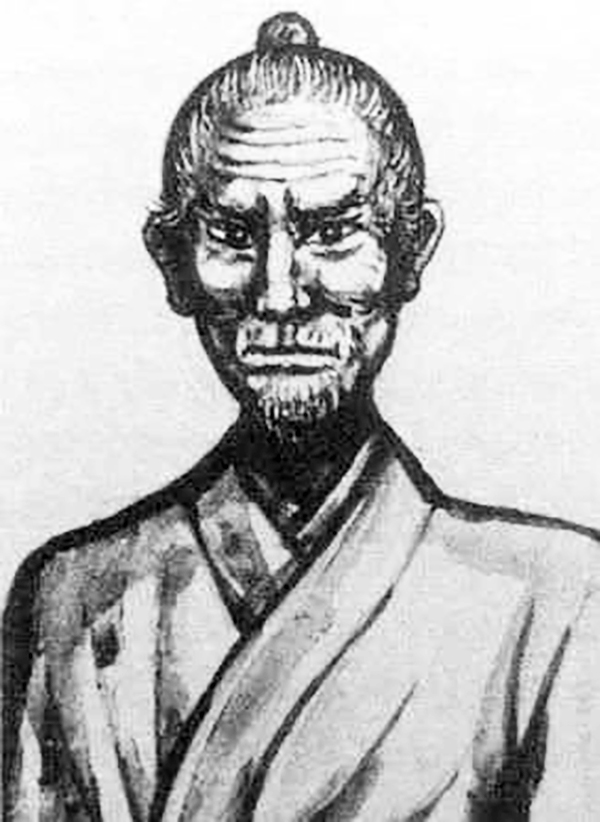
We only display images with clarified provenance and license: historical photographs from public domain collections as well as illustrated portraits from the Okinawa Karate Kaikan (CC0), each with source and license information on the card. Illustrated portraits are marked as such — they document the tradition, not the appearance of a person. We do not show generated portraits of historical figures; where no documented photographic evidence exists, there is a note on the card.

18 People in this selection.

Drawn portrait of Sakugawa Kanga

Drawn museum portrait · not a photograph

Okinawa Karate Kaikan · CC0 · Proof

Sakugawa Kanga

佐久川 寛賀

Life dates
1733–1815
Location
Shuri · Okinawa

First person associated with a recorded Tōde lineage. Connects Chinese Kempō influences with the Okinawan tradition.

Drawn portrait of Matsumura Sōkon

Drawn museum portrait · not a photograph

Okinawa Karate Kaikan · CC0 · Proof

Matsumura Sōkon

松村 宗棍

Life dates
1809–1899
Location
Shuri · Okinawa

Served the court in Shuri and taught the following generation. Considered a central figure of the Shuri line — his position is relatively well documented.

松茂良 興作Matsumora Kōsaku

No verified, rights-cleared image document available.

Matsumora Kōsaku

松茂良 興作

Life dates
1829–1898
Location
Tomari · Okinawa

Represents the tradition of the port district of Tomari. The term "Tomari-te" is a later collective name.

Drawn portrait of Aragaki Seishō

Drawn museum portrait · not a photograph

Okinawa Karate Kaikan · CC0 · Proof

Aragaki Seishō

新垣 世璋

Life dates
1840–c. 1918
Location
Naha / Shuri · Okinawa

Mediated between the lines: his teaching reached both Shuri and Naha circles. Important because it shows that the three "centres" were not closed schools.

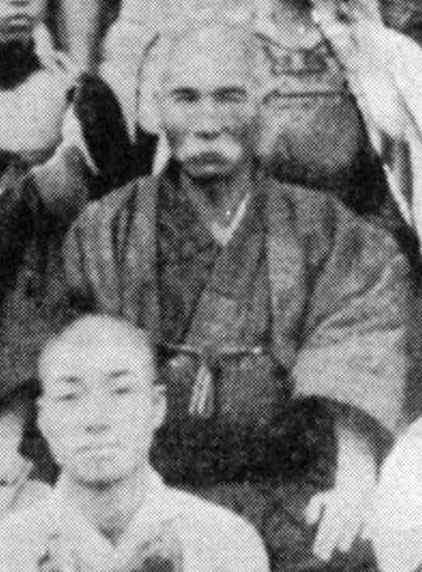
Historical photograph of Itosu Ankō, circa 1909/1910

Präfekturbibliothek Okinawa, um 1909/1910 · Gemeinfrei · Proof

Itosu Ankō

糸洲 安恒

Life dates
1831–1915
Location
Shuri · Okinawa

Introduced karate into Okinawan school physical education, organised techniques and simplified kata for group instruction (later Pinan/Heian). His 1908 memorandum is a key document of modernisation.

安里 安恒Asato Ankō

No verified, rights-cleared image document available.

Asato Ankō

安里 安恒

Life dates
1828–1906
Location
Shuri · Okinawa

Representative of the Shuri line with broad practice (including weapons and wrestling). Together with Itosu, he shaped the training of Funakoshi Gichin.

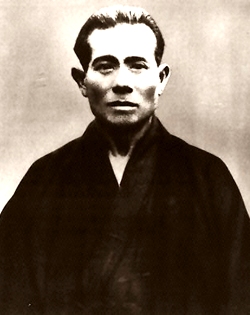
Historical photograph of Higaonna Kanryō, circa 1900

Historische Aufnahme, um 1900 · Gemeinfrei · Proof

Higaonna Kanryō

東恩納 寛量

Life dates
1853–1916
Location
Naha · Okinawa

Shaped the Naha line with distinct breathing and strength training. Several of the most well-known style foundations emerged from his teaching.

Historical photograph of Motobu Chōki, 1932

Aufnahme von 1932 · Gemeinfrei · Proof

Motobu Chōki

本部 朝基

Life dates
1870–1944
Location
Shuri · Okinawa

Focused on application and sparring and appeared publicly on the mainland as a result. His 1926 book documents Kumite practically, not just as form.

Historical photograph of Kyan Chōtoku

Aus: Nakasone Genwa, 1938 · Gemeinfrei · Proof

Kyan Chōtoku

喜屋武 朝徳

Life dates
1870–1945
Location
Shuri · Okinawa

Combined teaching material from Shuri and Naha and was considered a master of practical application. Through his students, he had a significant influence on the post-war organisations in Okinawa.

Historical photograph of Hanashiro Chōmo

Aus: Nakasone Genwa, 1938 · Gemeinfrei · Proof

Hanashiro Chōmo

花城 長茂

Life dates
1869–1945
Location
Shuri · Okinawa

Preserved and disseminated Itosu's kata tradition and was involved in the attempts at self-organisation of Okinawan karate in the 1920s.

Historical photograph of Chibana Chōshin

Aus: Nakasone Genwa, 1938 · Gemeinfrei · Proof

Chibana Chōshin

知花 朝信

Life dates
1885–1969
Location
Shuri · Okinawa

Consciously preserved the Shuri tradition and later gave it the name Shōrin-ryū. His example shows that the style names were only assigned retrospectively, even in Okinawa.

Historical photograph of Funakoshi Gichin, 1924

Aufnahme von 1924 · Gemeinfrei · Proof

Funakoshi Gichin

船越 義珍

Life dates
1868–1957
Location
Shuri · later Tokyo

Spread karate through demonstrations (from 1916/17) and teaching on the mainland; his textbook 琉球 Kenpō Tōde appeared in 1922, 空手道教範 in 1935. He was a mediator of a Shuri tradition, not its creator.

Historical photograph of Miyagi Chōjun, 1938

Aus: Nakasone Genwa, 1938 · Gemeinfrei · Proof

Miyagi Chōjun

宮城 長順

Life dates
1888–1953
Location
Naha · Okinawa

Developed the Naha line into the school later called Gōjū-ryū, contributed to standardisation in Okinawa and also taught outside Japan.

Historical photograph of Mabuni Kenwa

Aus: Nakasone Genwa, 1938 · Gemeinfrei · Proof

Mabuni Kenwa

摩文仁 賢和

Life dates
1889–1952
Location
Shuri · later Osaka

Combined Shuri and Naha teachings into one system (later Shitō-ryū) and made it known in the Kansai region. His publications document the transition from tradition to textbook.

Historical photograph of Ōtsuka Hironori

Wikimedia Commons (Hochladung mit eigener Lizenzangabe) · CC BY-SA 4.0 · Proof

Ōtsuka Hironori

大塚 博紀

Life dates
1892–1982
Location
Shimotsuma · later Tokyo

First founder of a major style that did not originate in Okinawa. Combined karate with principles from Jūjutsu and created an independent direction with Wadō-ryū.

Historical photograph of Uechi Kanbun

Historische Aufnahme · Gemeinfrei · Proof

Uechi Kanbun

上地 完文

Life dates
1877–1948
Location
Motobu · Okinawa

Brought a system from Fuzhou which, via family tradition, became the Uechi-ryū school. Exemplary of the Chinese branch that continued to exist independently in Okinawa.

Historical photograph of Nagamine Shōshin

Wikimedia Commons (Hochladung mit eigener Lizenzangabe) · CC BY-SA 4.0 · Proof

Nagamine Shōshin

長嶺 将真

Life dates
1907–1997
Location
Naha · Okinawa

Combined teaching material from several Okinawan lines and founded the school named after him, Matsubayashi-ryū. Was active as a police instructor and worked in the post-war organisation of Okinawa.

Masutatsu Oyama, founder of Kyokushin Karate

Historical photograph from the media collection of the Shinzen Dojo Berlin

Ōyama Masutatsu

大山 倍達

Life dates
1923–1994
Location
Gimje, Korea · later Tokyo

Developed a full-contact karate from Tokyo post-war training and competition experience and organised it internationally from 1964. His biography is in parts self-testimony — information on teachers and training paths differs between sources.

Lineages

tea­ching rela­ti­on­ships and influen­ces

Solid line: documented teacher-student or founding relationship. Dashed line: historical or technical influence (◐). There is no single node from which all lines originate.

Fujian18th century19th centuryaround 19001910–1930safter 1945from 1964Sakugawa Kanga — 1733–1815Sakugawa Kanga1733–1815Matsumura Sōkon — 1809–1899Matsumura Sōkon1809–1899Matsumora Kōsaku — 1829–1898Matsumora Kōsaku1829–1898Aragaki Seishō — 1840–um 1918Aragaki Seishō1840–c. 1918Itosu Ankō — 1831–1915Itosu Ankō1831–1915Asato Ankō — 1828–1906Asato Ankō1828–1906Higaonna Kanryō — 1853–1916Higaonna Kanryō1853–1916Motobu Chōki — 1870–1944Motobu Chōki1870–1944Kyan Chōtoku — 1870–1945Kyan Chōtoku1870–1945Hanashiro Chōmo — 1869–1945Hanashiro Chōmo1869–1945Chibana Chōshin — 1885–1969Chibana Chōshin1885–1969Funakoshi Gichin — 1868–1957Funakoshi Gichin1868–1957Miyagi Chōjun — 1888–1953Miyagi Chōjun1888–1953Mabuni Kenwa — 1889–1952Mabuni Kenwa1889–1952Ōtsuka Hironori — 1892–1982Ōtsuka Hironori1892–1982Uechi Kanbun — 1877–1948Uechi Kanbun1877–1948Nagamine Shōshin — 1907–1997Nagamine Shōshin1907–1997Ōyama Masutatsu — 1923–1994Ōyama Masutatsu1923–1994Kempō in Fuzhou — Fujian · AustauschKempō in FuzhouFujian · exchangeShōtōkan — Funakoshi · TokioShōtōkanFunakoshi · TokyoGōjū-ryū — Miyagi · NahaGōjū-ryūMiyagi · NahaShitō-ryū — Mabuni · OsakaShitō-ryūMabuni · OsakaWadō-ryū — Ōtsuka · TokioWadō-ryūŌtsuka · TokyoShōrin-ryū — Chibana · OkinawaShōrin-ryūChibana · OkinawaUechi-ryū — Uechi · OkinawaUechi-ryūUechi · OkinawaMatsubayashi-ryū — Nagamine · OkinawaMatsubayashi-ryūNagamine · OkinawaKyokushin — Ōyama · Tokio 1964KyokushinŌyama · Tokyo 1964
Styles

Direc­tions and their origins

Style names emerged when the Budō system required clear classifications. They bundle traditions — they do not evaluate them.

The four major mainland styles

This compilation follows the association tradition of Japan. It is an ordering pattern of the 20th century.

Okinawan lines

These directions were cultivated in Okinawa and mostly named only in retrospect. They do not follow the mainland logic of the major styles.

Selected

Shōtōkan 松濤館流

Founder
Funakoshi Gichin (1868–1957)
Origin
Shuri (Okinawa) via Tokyo
Defining influences
Shuri tradition (Asato, Itosu); adaptation to Japanese Budō forms
Chronological classification
Name from the 1930s
Historical role
Style first disseminated on the mainland; became the most famous karate of Japan internationally via universities and associations.
Historically verified

No style is the further development of another. The differences are based on different teaching paths, focuses, and regional exponents—not on a ranking.

Full contact

Kyo­kus­hin — full-contact as a new direc­tion

A post-war direction: from Tokyo Karate, Budo experience, and the question of what combat without protective gear could look like.

Origin and training

Ōyama Masutatsu was born as Choi Yeong-eui in Gimje (Korea) in 1923 and went to Japan in 1938. After the war, he studied in Tokyo and trained in the environment of Shōtōkan — according to his own statements in the Funakoshi family dojo — as well as several years of Gōjū-ryū, including with So Nei-chu and Yamaguchi Gōgen. In addition, there was instruction from Yoshida Kōtarō. The weighting of these training paths is presented differently in the sources; parts of his biography are based on personal testimonials.

State of research / probable

Full-contact as a unique response

In the late 1940s, Ōyama withdrew for intensive training; in the early 1950s, he began teaching in Tokyo. His environment was shaped by the discussion about realistic combat: in Tokyo, fighting was also done with protective gear at the time. Ōyama decided on the path without protective gear in competition — this became the hallmark of Kyokushin.

State of research / probable

Competition as a form of organisation

In 1969, the first open Japanese championship took place in Tokyo, followed in 1975 by the first World Championship of full-contact Karate — also in Tokyo. Open classes instead of association selections and the renunciation of protective gear made these competitions internationally famous. From Ōyama's environment, Japanese kickboxing later also developed.

Historically verified

Spread and fragmentation

Kyokushin spread worldwide through students and foreign branches. After Ōyama's death in 1994, the organisation disintegrated into several associations, each claiming his teachings. This fragmentation is not a peculiarity of Kyokushin, but a typical process for large martial arts organisations of the 20th century.

Historically verified
Ōyama Masutatsu training, press photograph from 1951

Ōyama Masutatsu, press photograph from 1951 from the time of his training in Tokyo — before the founding of his own organisation.

Aus: ゴング格闘技 (1951) · Gemeinfrei · Proof

Ōyama Masutatsu in a karate stance, press photograph from 1954

Ōyama Masutatsu, press photograph from 1954. The images in this section are contemporary press photographs, not promotional shots.

Aus: ゴング格闘技 (1954) · Gemeinfrei · Proof

Kyokushin is not an era of Karate and not an end point of its history. It stands alongside the Okinawan lineages, Budo Karate, university karate, and competition karate — with its own organisation, own rules, and own impact.

Epilogue

Our own Lineage

How our practice relates to the history above — transparently and without the claim of being history itself.

Level 1

Full-contact Karate

Kyokushin, founded in 1964 in Tokyo by Ōyama Masutatsu. A post-war discipline, as described in the section above.

Level 2

Our organisation

Our association continues its tradition as IKO World Zen-Kyokushin and was founded in 2019. Information regarding our own organisation is provided by our community.

Level 3

Shinzen Dojo Berlin

Founded in 2019 by Sensei Anh Son Le (3rd Dan Kyokushin). Training in Berlin-Steglitz (children and youth, Saturdays) and Berlin-Schöneberg (adults).

Our lineage traces back to full-contact Karate, not directly to the Okinawan traditions. We therefore train a branch whose roots extend through the post-war Tokyo period back to the Shuri and Naha traditions — just as the lineage graphic on this page shows. Details about Kyokushin organisations and our instructor lineage can be found on the linked pages.

Timeline

Events by inte­rest

Filter by era, location, and type of event. Every event cites its source.

Period
Location
Type
31 Events
Original sources

Ori­gi­nal sources ent­de­cken

Documents and collections used to verify the statements on this page. The links lead to the holding institutions.

1922 (大正11)

Ryūkyū Kenpō Tōde

琉球拳法 唐手

Funakoshi Gichin (富名腰義珍)

The first karate textbook published in Tokyo. It records the state of the technique before Dan grades, competition or style names became common in Japan. The Okinawa librarian and NDL evidence identify the first edition; the full text is freely accessible in the Digital Collections of the National Diet Library.

National Diet Library Japan (Digital Collections)

25 October 1936 (Shōwa 11)

Karate-Za-Dankai — Discussion round of karate masters

空手座談会

Organiser: Ryūkyū Shinpō newspaper (琉球新報)

Invited by the Ryūkyū Shinpō newspaper, karate masters in Naha discussed the designation of karate and the standardisation of Kata together with representatives of the prefectural government, the military, the police, and the press. The Okinawa Prefectural Archives lists this day as "Karate Day" (空手の日). The event is a document showing that nomenclature and standardisation are the result of an administrative and institutional history.

Okinawa Prefectural Archives (沖縄県公文書館)

1908 (明治41)

Memorandum on the introduction of karate in schools

糸洲安恒 — 学校体育への唐手導入に関する文書 (1908)

Itosu Ankō (糸洲安恒, 1831–1915)

Itosu presented his opinion to the prefectural government on teaching karate as a school subject — combined with the adaptation of techniques and Kata to the school environment. The process is considered a key document of modernisation: karate transforms from a personally passed-down skill into a subject of instruction.

Documented by institutions in Okinawa (OKIC, Okinawa Karate Kaikan)

constantly updated

Research and source guide of the Okinawa Prefectural Library

沖縄県立図書館 —「空手を知るための10冊」

Okinawa Prefectural Library (沖縄県立図書館)

Selected bibliography on Okinawa Karate with bibliographic information and classification of the titles — a practical introduction to tracing historical statements back to their source.

Okinawa Prefectural Library

Sources

Sources and Method

This page relies on institutions and specialist literature. Summaries from the net and encyclopaedia entries are not used as evidence.

Japanese primary sources, libraries and archives

Early karate literature and official documents. Funakoshi's two standard works are made accessible via the National Diet Library of Japan.

Institutions in Okinawa

State and prefectural institutions that document, research and disseminate Okinawa Karate as cultural heritage.

Associations and style organisations

The institutions that have standardised and disseminated styles. Association representations are self-testimonies — they are read here as such.

Research and specialist literature

Scientific contributions on the institutionalisation and terminology of karate.

Sport and the Olympic Games

Documentation of the 2021 Olympic intermezzo — a chapter in sports history, not martial arts history.

Three levels of evidence instead of one claim

Historically controversial issues are not smoothed over. Each statement is assigned to a level: ● historically verified, ◐ state of research or probable, ○ tradition or legend.

Official and institutional sources first

Priority is given to institutions of Okinawa Prefecture, the Okinawa Prefectural Archives, Okinawa Karate Kaikan, the Okinawa Karate Information Center, the National Diet Library of Japan, associations, and specialist literature with references. Summaries from the web and encyclopedia entries do not serve as evidence.

Contradictions remain visible

Where sources differ — for example, regarding the exact dates of birth and death of individual masters or the contribution of personalities to the development of karate — the differing information is stated instead of choosing the most favourable reading.

Images

The page uses historical photographs only where authenticity and usage have been clarified. No portraits are generated that could look like historical recordings.

Images and illustrations

The visual documents on this page come from public domain or freely licensed collections; the image in the header is a personal photograph taken by the dojo. Origin, licence and proof are provided with every visual document. Drawn portraits of the Okinawa Karate Kaikan (CC0) are marked as drawings. The depictions in periods III and VII are illustrations by the editorial team: they show a described situation, not a handed-down photograph. This page does not use generated portraits of historical figures.

  • Sakugawa Kanga — gezeichnetes Museumsporträt

    Okinawa Karate Kaikan · CC0 · Proof

  • Matsumura Sōkon — gezeichnetes Museumsporträt

    Okinawa Karate Kaikan · CC0 · Proof

  • Aragaki Seishō — gezeichnetes Museumsporträt

    Okinawa Karate Kaikan · CC0 · Proof

  • Itosu Ankō — historische Aufnahme

    Präfekturbibliothek Okinawa, um 1909/1910 · Gemeinfrei · Proof

  • Higaonna Kanryō — historische Aufnahme

    Historische Aufnahme, um 1900 · Gemeinfrei · Proof

  • Motobu Chōki — historische Aufnahme

    Aufnahme von 1932 · Gemeinfrei · Proof

  • Kyan Chōtoku — historische Aufnahme

    Aus: Nakasone Genwa, 1938 · Gemeinfrei · Proof

  • Hanashiro Chōmo — historische Aufnahme

    Aus: Nakasone Genwa, 1938 · Gemeinfrei · Proof

  • Chibana Chōshin — historische Aufnahme

    Aus: Nakasone Genwa, 1938 · Gemeinfrei · Proof

  • Funakoshi Gichin — historische Aufnahme

    Aufnahme von 1924 · Gemeinfrei · Proof

  • Miyagi Chōjun — historische Aufnahme

    Aus: Nakasone Genwa, 1938 · Gemeinfrei · Proof

  • Mabuni Kenwa — historische Aufnahme

    Aus: Nakasone Genwa, 1938 · Gemeinfrei · Proof

  • Ōtsuka Hironori — historische Aufnahme

    Wikimedia Commons (Hochladung mit eigener Lizenzangabe) · CC BY-SA 4.0 · Proof

  • Uechi Kanbun — historische Aufnahme

    Historische Aufnahme · Gemeinfrei · Proof

  • Nagamine Shōshin — historische Aufnahme

    Wikimedia Commons (Hochladung mit eigener Lizenzangabe) · CC BY-SA 4.0 · Proof

  • Illustration: School and club practice around 1900

    Illustration of the Shinzen Dojo Berlin

  • Group photograph after the Butokusai of the Dai Nippon Butokukai, 1938

    Aus: 実戦!ケンカ空道家列伝 · Gemeinfrei · Proof

  • Group photograph of karate masters in Tokyo, 1930s

    Aus: 空手道一路 (1956) · Gemeinfrei · Proof

  • Miyagi Chōjun during his stay in Hawaii, 1934/35

    Reproduktion aus: Hawai Okinawa-kenjin Hattenshi (1941) · CC BY-SA 4.0 (Scan) · Proof

  • Illustration: spread of karate today

    Illustration of the Shinzen Dojo Berlin

  • Ōyama Masutatsu training, press photograph from 1951

    Aus: ゴング格闘技 (1951) · Gemeinfrei · Proof

  • Ōyama Masutatsu in a karate stance, press photograph from 1954

    Aus: ゴング格闘技 (1954) · Gemeinfrei · Proof

Japanese titles are given in the original; the German explanations are provided by the Shinzen Dojo Berlin. Where sources differ from one another, this is stated at the respective statement — not in a footnote at the end of the page.

Frequently asked questions

History explai­ned

Get to know Kyokushin in training

Anyone who wants to get to know Kyokushin not just by reading about it but in practice can visit the Shinzen Dojo Berlin training sessions. Adults train in Berlin-Schöneberg, children and teenagers in Berlin-Steglitz.