Kickboxing Berlin – Kickboxing or Kyokushin Karate?
Punches and kicks connect the sports. Their shared history leads to the Oyama Dojo – and to an honest question: Which form of training suits you today?
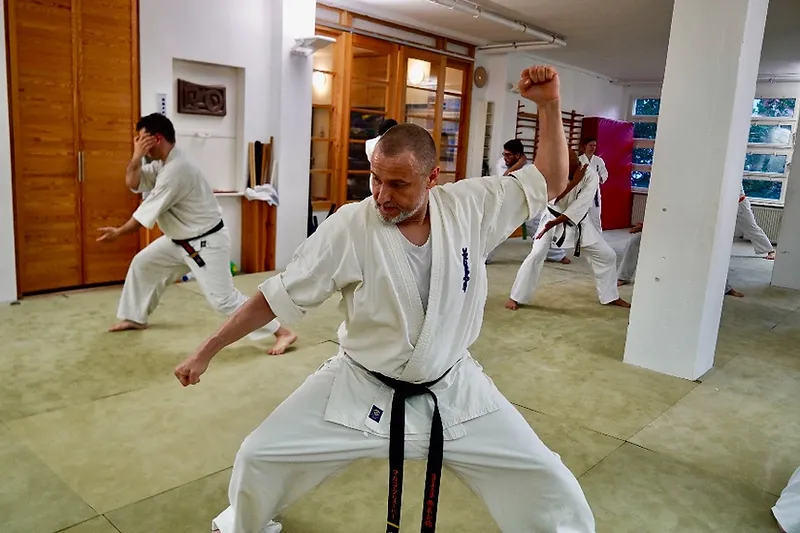
What we teach
Shinzen offers Kyokushin Karate, not a kickboxing class. If you specifically want to train kickboxing, a kickboxing school is the right place. If you are interested in punches, kicks, conditioning, and a karate path with Kihon, Kata, and Kumite, it is worth taking a closer look at Kyokushin.
The connection is more than just a similarity of techniques: People from Masutatsu Oyama's karate circle were involved in fights against Muay Thai fighters in the 1960s. These encounters are part of the prehistory of Japanese kickboxing.
The Oyama Dojo and Muay Thai
The Japanese original chronicle of the Kyokushinkaikan mentions the exhibition fight with Muay Thai at Lumpinee Stadium in Thailand for Februaryy 1964. It explicitly names the three participants by their Japanese names: 黒崎健時 (Kenji Kurosaki), 中村忠 (Tadashi Nakamura) and 藤平昭雄 (Akio Fujihira). The chronicle records two victories and one defeat. A Japanese newspaper report dated 14 Januaryy 1964, documented in the book extract, also names the three karateka.
The Oyama Dojo already had its own history at the time: its first dojos were founded in the 1950s. Today's Kyokushinkaikan chronicle also names 1964 as the year of the formal organization of the Kyokushinkaikan. The history of Kyokushin and the beginnings of Japanese kickboxing touch; however, Kyokushin did not originate from kickboxing. The Chronicle of the Mejiro Gym Amsterdam also documents a later direct connection to Kurosaki's dojo in Tokyo.
There are discrepancies regarding individual dates and sequences in historical chronicles. Therefore, we describe the verifiable connection here and do not attribute any further roles to the three men in the founding of kickboxing.
Sources for historical classification
- 極真の歴史 – official Japanese Kyokushinkaikan chronicle: entry for Februaryy 1964 with location, names, and result.
- 国際空手道連盟極真会館 60年の軌跡 – Japanese history archive: supplementary chronology and historical videos in the original.
- Mejiro Gym Amsterdam: own history with archive photos of the later encounter with Kurosaki in Tokyo.
- Japanese book excerpt with contemporary report: article on the announcement at the time.

Kurosaki, Mejiro and the next step
After the encounters with Muay Thai, Kenji Kurosaki remained a central figure at the intersection of karate and emerging Japanese kickboxing. Later, he founded the Mejiro Gymin Tokyo, which became an important reference point for Japanese kickboxing.
The own history of the Mejiro Gym Amsterdam describes how the Dutchman Jan Plas trained with Kurosaki in Japan and subsequently continued the name Mejiro in Amsterdam. This documents a direct line of tradition: early Kyokushin environment and Muay Thai comparisons in Japan, Kurosaki's kickboxing work in Tokyo, and later the transfer to the Netherlands.
It does not follow from this that modern kickboxing originated exclusively from Kyokushin. Kickboxing developed in different countries, rulesets, and organizations. However, the connection to Kurosaki and the Oyama Dojo is a verifiable part of the Japanese and later European development.
1964
Bangkok
Kurosaki, Nakamura, and Fujihira compete against Muay Thai.
Later
Tokyo
Kurosaki focuses increasingly on kickboxing and founds the Mejiro Gym.
1970er
Japan → Amsterdam
Jan Plas trains with Kurosaki and adopts the name Mejiro for the Netherlands.
Europe
Dutch Kickboxing
The Dutch scene further develops its own successful training and competition traditions from this.
Kickboxing and Kyokushin today
Both can include punches, kicks, and intensive partner work. Schools and rulesets differ. Here, we therefore compare typical focuses of kickboxing with the concrete Kyokushin offer at Shinzen Dojo.
| Criterion | Kickboxing, depending on the school | Kyokushin at Shinzen |
|---|---|---|
| Punches (fist techniques)? | Yes | Yes |
| Kicks? | Yes | Yes |
| Low Kicks? | Yes, usually allowed | Yes |
| Head strikes with fists? | Yes, usually allowed | No, not allowed in kumite |
| Head strikes with kicks? | Yes, usually allowed | Yes |
| Boxing gloves? | Yes, usually | No, traditionally without gloves |
| Kata (forms)? | Not common | Yes, integral part |
| Kihon (basic technique)? | Varies significantly | Yes, central pillar |
| Belt system? | Rare | Yes, clear path from white to black belt |
| Sparring? | Yes | Yes, kumite is built up gradually |
| Competition? | Yes, depending on the association | Yes, regional to international |
When is kickboxing the better choice?
If you specifically want to train kickboxing combinations and kicks without a traditional karate path, look for a kickboxing school and check the actual training form there.
When is Kyokushin worthwhile?
If you want to combine intensive stand-up fighting with a long-term karate path and also want to engage with kumite later on. Like any martial art, contact carries a risk of injury.
Kickboxing in Berlin or Kyokushin?
If you are looking for a training opportunity in Berlin, the decision should not depend solely on the name of the sport. The decisive factor is which form of training you actually want.
Kickboxing fits better if you...
- want to combine classic boxing combinations with kicks,
- want to train with boxing gloves and, depending on the rules, also fist strikes to the head,
- not looking for a traditional Karate path with Kata and Kihon.
Kyokushin is a better fit if you...
- are looking for intensive stand-up fighting with low kicks and kumite,
- also want Kihon, Kata, belt grades and Dojo culture,
- are looking for a long-term Karate training path.
Do you want to compare all directions first? Then use our Martial Arts Berlin Guide. You can find a general overview of the main disciplines under Martial arts compared.
How you start in Berlin-Schöneberg
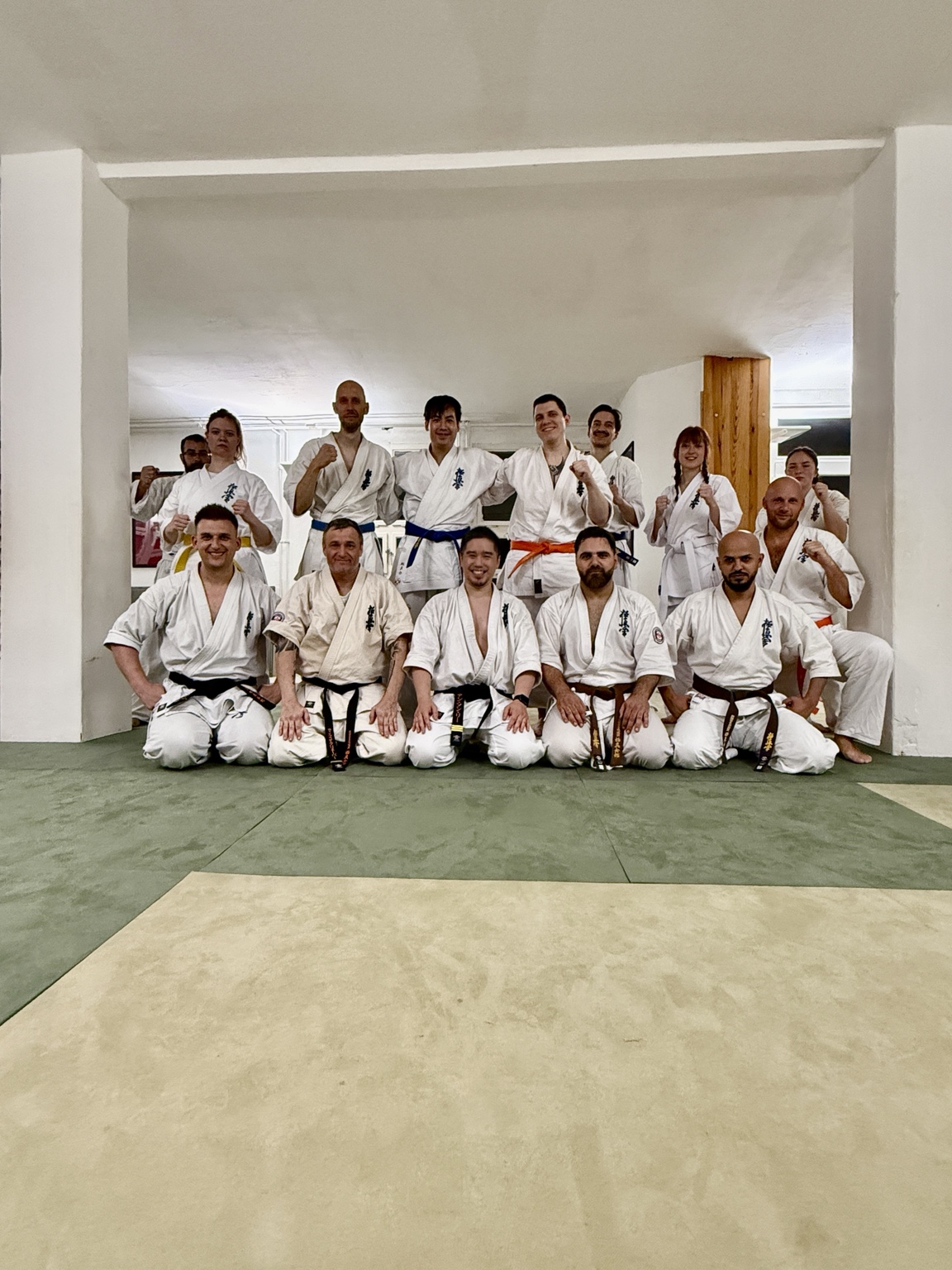
Adult training takes place on Mondays and Thursdays from 20:30 to 21:45 at Kolonnenstraße 26. Beginners without prior Karate experience are welcome. For the free trial session, comfortable sportswear is sufficient to begin with; kumite is prepared step by step.
Kyokushin is taught at Shinzen Dojo by Sensei Anh Son Le. Before visiting, read the Details on the adult course and the current training times.