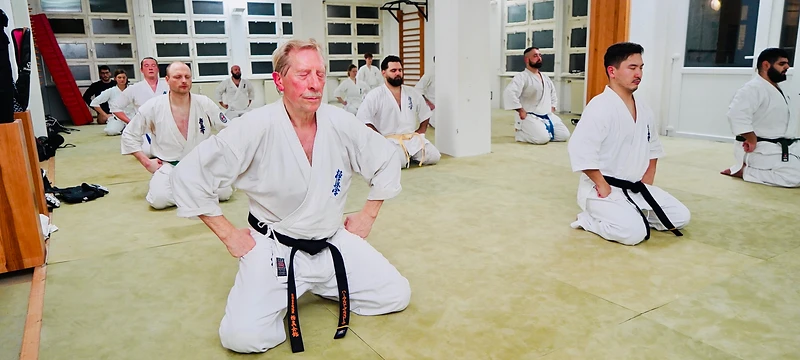
Respect and Tradition: How do you address your masters at the Shinzen Dojo?
Hast du dich jemals gefragt, warum die korrekte Anrede deiner Lehrer im Shinzen Dojo so wichtig ist? Im Kyokushin Karate ist die Art und Weise, wie du deine Sensei, Senpai und Shihan ansprichst, mehr als nur eine Formalität – es ist ein Ausdruck von tiefem Respekt und Teil einer reichen Tradition.
The meaning of Sensei: At Shinzen Dojo, the Sensei is more than just a teacher; he is a mentor and a role model. When you address someone as "Sensei", you show respect and recognition for their knowledge and leadership. This title does not just stand for an experienced martial artist, but also for someone who embodies the philosophical and ethical principles of karate.
The role of the Senpai: Senpai, or "senior students", are important for your learning process. They often teach you the basics and act as a link between you and the Sensei. As Senpai, they represent the next generation of teachers and leaders at the dojo.

The honour of addressing a Shihan: The title Shihan is awarded to high-ranking and very experienced teachers. These masters are recognised authorities in the art. When you address a Shihan, you show your deepest reverence for their outstanding contributions to the martial art.
Grading levels and forms of address: In Kyokushin Karate, there are Dan grades from 1st to 9th Dan. Each of these grades shows a higher level of experience and knowledge. Regardless of the Dan grade, holders of these grades are usually addressed as "Sensei" or, in higher grades, as "Shihan", in order to acknowledge their experience and their commitment to the art.
Respect outside the dojo: It is just as important to use these titles outside the dojo as well. This shows that your respect and appreciation for your teachers and the martial art go beyond the walls of the dojo and demonstrates your dedication and your understanding of the traditions of Budo.
Cultural differences: In Western cultures, there is rarely a direct equivalent to titles like Sensei or Senpai, which makes correct usage and pronunciation difficult. In many Western countries, the focus is more strongly on individuality and informality, which stands in contrast to Japanese culture with its emphasis on respect, hierarchy, and formality.
Tips for correct usage and pronunciation:
- Practice makes perfect: Practice the pronunciation of the titles regularly. You can listen to recordings by native speakers and repeat them to get a feel for the correct pronunciation.
- Understand the meaning: Learn more about Japanese culture and the meaning of these titles. This helps you to understand them not just as words, but as part of a rich tradition.
- Use them in everyday life: Try to use these titles regularly at the dojo and in relevant situations. Regular usage helps you get used to the correct form and pronunciation.
Conclusion:
The correct way to address your teachers at Shinzen Dojo is an essential aspect of your practice and your learning.
It promotes a culture of respect, appreciation, and discipline. By addressing your teachers appropriately, you show not only your esteem for them, but also your commitment to the deep values of Kyokushin Karate. Honour these traditions and contribute to cultivating a respectful and empowering community at Shinzen Dojo.
Ein Zitat von Sosai Mas Oyama:
"Karate is like boiling water; without heat, it turns cold."


This quote reminds you of the importance of continuous practice and commitment – values that you express at Shinzen Dojo through the correct address and respect of your masters.